What is Surrogate Partner Therapy?
Surrogate Partner Therapy (SPT) is a collaborative therapeutic approach in which a client works with a therapist and a trained surrogate partner to address challenges related to intimacy, sexuality, communication, and relationships.
Unlike traditional talk therapy, SPT can include guided, experiential exercises that help you practise new skills and explore your experiences in real time.
The surrogate partner acts as a supportive practice partner, helping you develop greater awareness of your body, communicate your needs, establish boundaries, and build confidence in intimate situations.
The work is tailored to your individual goals and may include relaxation, mindfulness, communication exercises, non-sexual touch, sensual awareness, and, where appropriate and explicitly agreed upon, other forms of intimate exploration.
SPT is not about performing, pleasing someone else, or meeting a particular standard of sexuality. It's about discovering what feels authentic, developing skills at your own pace, and building a more trusting relationship with yourself and others.

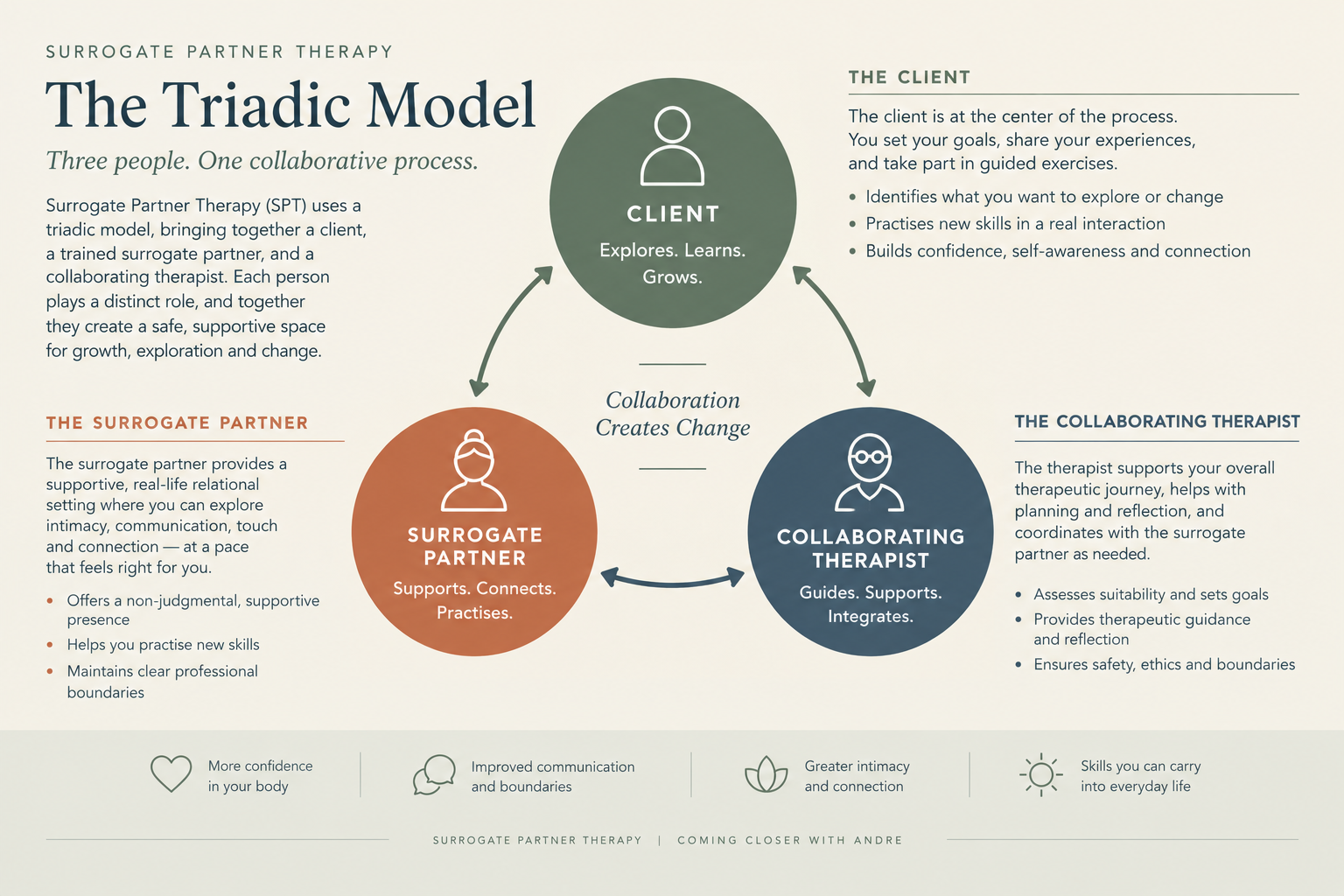
What happens during SPT?
1. Assessment and goal setting
You explore your history, current challenges, and hopes for the work. You and your therapist consider whether SPT is appropriate and identify the skills and experiences you want to develop.
2. Building Safety & Awareness
You develop skills in relaxation, body awareness, emotional regulation, communication, and boundaries. The focus is on recognizing your needs and learning to stay present without rushing the process.
3. Experiential partner work
With your surrogate partner, you practice new skills in a real interpersonal relationship. Depending on your goals and mutual consent, this may include eye contact, emotional expression, communication, touch, sensual awareness, and other agreed forms of intimacy.
4. Integration and reflection
You reflect on what you experienced, explore emotional responses and challenges, and work with your therapist to integrate your learning into everyday life and future relationships.
How SPT differs from traditional therapy
Traditional psychotherapy often focuses on understanding your experiences, emotions, beliefs, and patterns through conversation and reflection.
SPT can complement that process by giving you an opportunity to practice new ways of relating in a real interpersonal setting.
The goal is to bridge the gap between understanding something intellectually and being able to experience it differently.
SPT is not a replacement for psychotherapy or medical care. It is a specialized approach that may be incorporated into a broader therapeutic process when appropriate.