
By Andre lazarus | Coming Closer | November 24, 2026

The first time it happens, you probably laugh it off. Too much stress, too little sleep, one drink too many. The second time, you pay closer attention. By the third, you are checking in with your body before anything has started, and an uninvited thought has arrived: what if it happens again?
Here is something worth knowing early. You can be completely attracted to someone and still struggle to get or keep an erection. Wanting sex, feeling aroused and having an erection are related, but they are not the same process. When one stumbles, it does not mean the others have gone anywhere.
So is it in your head or in your body? Erectile dysfunction (ED) can be psychological, physical or both, and the European Association of Urology (EAU) notes that most cases have a mixed origin. That is why guessing, in either direction, tends to go wrong. This article covers what each side can look like, how they feed each other, which clues are useful, and what a sensible next step looks like.
Can Erectile Dysfunction Be Psychological or Physical?
Yes, and often both. Clinicians describe three broad groups: psychogenic (mainly psychological), organic (mainly physical) and mixed. The EAU advises using these labels cautiously because most cases are mixed, and suggests speaking of a "primary" organic or psychogenic cause instead.
What starts the problem is not always what keeps it going. A physical factor can begin it and anxiety can sustain it. Or stress can come first and a physical contributor appear later.
ED is also not the same as low desire. The NHS notes that low sex drive can sometimes accompany ED, but they are separate issues. A man can want his partner badly and still have an erection that does not cooperate. Reading that as lost attraction is one of the most painful misreadings in a relationship, and it is usually wrong.
Psychological Causes of Erectile Dysfunction
The National Institute of Diabetes and Digestive and Kidney Diseases (NIDDK) says anxiety, depression and stress can cause ED or make it worse. So can feeling isolated or lonely, low self-esteem, lack of confidence and negative body image.
Performance anxiety and the watching mind
Imagine losing an erection once. The next time, part of your attention leaves the moment and starts monitoring. Is it firm enough? Is it fading? What is my partner thinking? Sex therapists call this spectatoring.
Your focus has moved from sensation to performance. The EAU lists cognitive distraction from erotic cues, unhelpful expectations about sex and poor self-esteem among the factors clinicians assess. It describes situational psychogenic ED as partner-related, performance-related or tied to distress. Erections that work alone but fade with a partner, or vanish when you reach for a condom, can fit this pattern. They are clues, not proof.
Depression, stress and mood
A 2018 meta-analysis of 49 publications found that depression was associated with higher odds of ED, and that ED was associated with higher odds of depression. The authors could not establish which comes first, and the studies varied widely. Treat it as a two-way association, not a verdict.
Relationships and intimacy
The EAU notes that dissatisfaction with a partner, poor sexual relationships and feeling emotionally disconnected during sex have been linked to erectile difficulties, while intimacy appears protective. These are associations, not a diagnosis of your relationship.
Physical Causes of Erectile Dysfunction
The EAU describes causes as vasculogenic (blood vessel), neurogenic (nerve), anatomical, hormonal, drug-induced and psychogenic, and notes that several can coexist.
How an erection works, briefly
An erection is a whole-body event. Signals from the brain and nerves relax smooth muscle in the penis, which lets blood flow in and stay there. Blood vessels, nerves and hormones all have to cooperate, and stress can interfere. According to the NHS, ED medicines such as sildenafil (Viagra) and tadalafil (Cialis) work by increasing blood flow to the penis. It is not a simple on/off switch, and it varies from person to person.
Blood vessels and heart health
ED and cardiovascular disease share risk factors. In one observational study of 965 men without heart disease, cited by the EAU, men under 50 with ED had a higher estimated cardiovascular risk. The 2024 Princeton IV expert consensus advises treating men with ED as at risk for cardiac events until shown otherwise. An umbrella review of meta-analyses found ED linked to a higher risk of cardiovascular disease.
None of this means ED signals heart disease in every man. It means ED is a good reason to check blood pressure, cholesterol and blood sugar, not just a private frustration.
Diabetes and metabolic health
NIDDK lists diabetes, chronic kidney disease, obesity, high blood pressure and atherosclerosis among the most common conditions behind ED. The EAU adds that diabetes can affect nerves as well as blood vessels.
Hormones
Low testosterone is a possible cause, not the explanation for every case. The Endocrine Society says hypogonadism should be diagnosed only when symptoms are present and testosterone is consistently low on repeat fasting morning tests. About 30% of men with an initial low result have a normal one on repeat. NIDDK also lists thyroid imbalance.
Nerves, structure, medicines and habits
NIDDK also lists multiple sclerosis, spinal cord injury, nerve damage from pelvic surgery, enlarged prostate and Peyronie's disease. Many common medicines can contribute, including some antidepressants, blood pressure medicines, diuretics, antihistamines and certain pain relievers. Alcohol, smoking, recreational drugs and low physical activity can too. If you suspect a medicine, talk to the prescriber before changing anything.
ED becomes more common with age, but NIDDK states it is not a routine part of aging.
How Psychological and Physical ED Can Become Connected
A 2021 systematic review described how fear of failure can trap men in a cycle of performance anxiety and sexual dysfunction. One common version looks like this:
Something causes a difficulty. It might be tiredness, alcohol, a medication, stress or an underlying physical condition.
You remember it. Next time, you scan for signs of trouble before and during sex.
Attention and stress shift. Worry pulls focus from sensation, which can make erections harder to keep.
Expectation hardens. You start to anticipate failure and may avoid initiating sex.
Confidence and closeness shrink, which feeds more anxiety.
This is a pattern described in the clinical literature, not a script every man follows. It matters because treating only the first link can leave the later ones in place. That is one reason the EAU recommends cognitive behavioral therapy alongside medical treatment when indicated.
How Can You Tell Whether ED Is Psychological or Physical?
You cannot reliably tell from the inside. The EAU notes that history, examination and lab tests may not pin down the exact diagnosis, though they help find contributing conditions. Some observations are still worth bringing to an appointment.
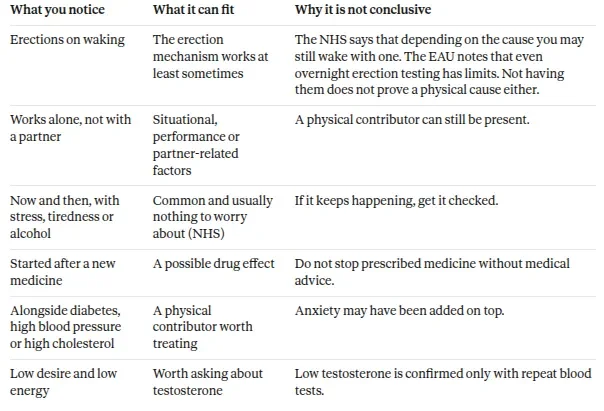
New or sudden ED deserves attention, not assumption. It should not automatically be filed under "stress."
How Is Erectile Dysfunction Diagnosed and Treated?
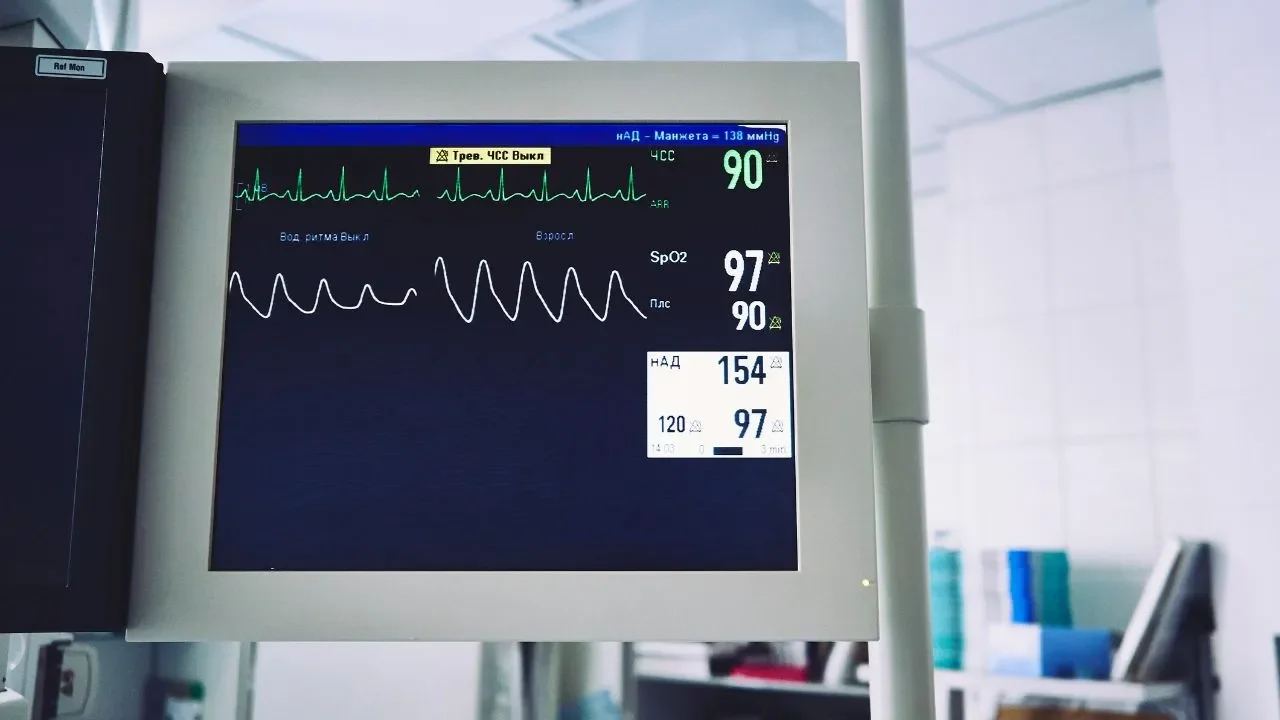
NIDDK says a clinician usually starts with a medical, sexual and mental health history, a physical exam and lab tests. The EAU's basic work-up includes blood glucose or HbA1c, a lipid profile and an early-morning testosterone test. It also uses a validated questionnaire such as the IIEF or SHIM to measure severity.
Treatment tends to be layered:
Lifestyle changes and underlying conditions. The EAU recommends starting these before or alongside ED treatments.
Medication review, if a prescribed drug may be contributing.
PDE5 inhibitors (sildenafil, tadalafil and similar), which the EAU names as first-line. The NHS warns that many websites sell fake versions, so use a registered pharmacy or a clinician.
Testosterone treatment, only when deficiency is confirmed.
Psychological support, including cognitive behavioral therapy (CBT) and psychosexual therapy. The EAU recommends CBT, with the partner included, combined with medical treatment when indicated.
On the psychological side, the 2021 review of 13 randomized trials (597 men with psychogenic ED, aged 19 to 55) found that combining psychological intervention with a PDE5 inhibitor worked better than either alone. The studies were small and varied, and the authors call for larger trials. Read it as promising, not settled.
When Should You See a Doctor?
See a primary care clinician or urologist if erection problems keep happening, if they are new, or if you have conditions such as diabetes, high blood pressure or high cholesterol. The NHS says ongoing ED can be a sign of a treatable health condition, and the EAU describes ED as a symptom rather than a disease.
Seeing a doctor does not mean ignoring the emotional side. It means checking both.
Understanding Intimacy Beyond Performance
Medical care addresses what the body is doing. It does not always address how sex feels once performance has become the measure. The EAU's treatment guidance begins with education about the psychological and physiological processes behind sexual response, and it finds intimacy protective.
That wider territory is where intimacy coaching can fit. It means noticing where your attention goes during sex and staying with sensation instead of monitoring. It means talking with a partner without shame, and widening what counts as a good experience beyond penetration. If the "watching" feeling sounds familiar, You're Not Bad in Bed. You're Not Even in Bed. You're in Your Head. and Slow Sex: Why Rushing Is Killing Your Connection go deeper. Our guide to erectile dysfunction coaching explains how that work looks in practice.
At Coming Closer, Andre Lazarus works experientially: you notice what your body does, slow down, and practice a different response in guided exercises with real-time feedback. It is available for individuals and couples.
One boundary matters. Coaching is not medical care or psychotherapy. It does not treat the physical causes of ED and does not replace a medical evaluation. It can sit alongside it.
If you are curious whether it fits, you can book a free discovery call. You do not need a diagnosis or a plan.
Frequently Asked Questions

Can anxiety cause erectile dysfunction?
Yes. NIDDK lists anxiety, depression and stress as causes or aggravating factors. Occasional trouble linked to stress is common, but if it keeps happening, get it checked.
Can you get morning erections and still have ED?
Yes. The NHS says that depending on the cause you may still get an erection when you wake up. Clinicians ask about them, but having or lacking them does not settle the cause.
Why can I get an erection when masturbating but not during sex?
Situational factors such as performance pressure or partner-related worry can play a part. A physical contributor can still be present, so treat the pattern as a clue and let a clinician look at the full picture.
Is erectile dysfunction always physical?
No. Psychological factors are recognized causes, and the EAU says most cases are mixed.
Can relationship problems cause ED?
They are associated with it. The EAU links relationship dissatisfaction and emotional disconnection to erectile difficulties. A medical check is still sensible.
Can low testosterone cause ED?
Sometimes. The Endocrine Society requires symptoms plus repeat low morning tests for a diagnosis. In its commissioned review, testosterone gave a small erectile benefit in men with deficiency and no significant sexual-function benefit in men without low levels.
When should I see a doctor about ED?
If it keeps happening, if it is new, or if you have diabetes, high blood pressure or high cholesterol.
This article is for education and is not medical advice. Coaching is not a substitute for medical evaluation or treatment.
